Hormonal acne‚ often triggered by fluctuations in androgens‚ leads to oil production and clogged pores. Diet plays a key role in managing breakouts by balancing hormones and reducing inflammation.
Understanding Hormonal Acne
Hormonal acne is primarily caused by fluctuations in androgens‚ leading to increased oil production and clogged pores. It often appears in areas like the jawline‚ chin‚ and lower cheeks. Common triggers include puberty‚ polycystic ovary syndrome (PCOS)‚ stress‚ and certain medications. Unlike teenage acne‚ hormonal acne can persist into adulthood‚ particularly in women. It is characterized by deep‚ painful cysts or nodules rather than surface-level pimples. While skincare and medications can help‚ addressing the root cause often requires lifestyle changes‚ including dietary adjustments. Understanding the link between hormones and skin health is crucial for effective management and achieving clearer‚ healthier skin over time.
The Role of Diet in Managing Hormonal Acne
Diet plays a significant role in managing hormonal acne by influencing hormone levels and skin health. Foods that cause inflammation or spike blood sugar can worsen breakouts‚ while nutrient-rich foods can help balance hormones and reduce inflammation. A diet low in glycemic index‚ high in fiber‚ and rich in healthy fats supports skin clarity. Additionally‚ avoiding dairy and processed foods can minimize hormonal imbalances. Probiotic-rich foods promote gut health‚ which is closely linked to skin health. By making informed dietary choices‚ individuals can address the root causes of hormonal acne and work towards achieving clearer‚ healthier skin. A well-structured diet plan is essential for long-term management and prevention of acne flare-ups.

Foods to Eat for Hormonal Acne
Incorporate high-fiber‚ low-glycemic‚ and probiotic-rich foods to balance hormones and reduce inflammation. Healthy fats‚ leafy greens‚ and whole grains support skin health and minimize breakouts naturally.
High-Fiber Foods
High-fiber foods are essential for managing hormonal acne as they support gut health and regulate hormones. They help minimize insulin spikes and flush out toxins. Include green leafy vegetables like kale‚ broccoli‚ and spinach‚ as well as cruciferous veggies‚ whole grains‚ and fruits with skin. These foods promote balanced blood sugar levels and reduce inflammation. A fiber-rich diet also aids in detoxification‚ preventing hormonal imbalances that trigger breakouts. Incorporate foods like oats‚ quinoa‚ and legumes to enhance your diet plan. Fiber helps maintain a healthy digestive system‚ which is crucial for clear skin and overall well-being. Make high-fiber foods a priority to support your hormonal acne management journey.
Healthy Fats
Healthy fats‚ such as omega-3 fatty acids‚ play a crucial role in reducing inflammation and healing acne-prone skin. These fats‚ found in avocados‚ nuts‚ seeds‚ olive oil‚ and fatty fish like salmon‚ help regulate hormones and promote skin health. Omega-3s‚ in particular‚ have potent anti-inflammatory effects‚ which can soothe redness and prevent breakouts. Incorporating these fats into your diet supports the body’s natural healing processes and contributes to a balanced hormonal profile. Vegetarian options include flaxseeds‚ chia seeds‚ and walnuts‚ while non-vegetarians can benefit from whole eggs and sardines. Healthy fats not only nourish the skin but also aid in overall well-being‚ making them a vital component of a hormonal acne diet plan.
Low-Glycemic Foods
Low-glycemic foods are essential for managing hormonal acne as they help regulate blood sugar levels and reduce insulin spikes. These foods‚ such as oats‚ brown rice‚ quinoa‚ legumes‚ and non-tropical fruits like berries and apples‚ are rich in complex carbohydrates. By avoiding rapid blood sugar fluctuations‚ they lower insulin levels‚ which in turn decreases androgenic hormonal activity—a key factor in hormonal acne. Incorporating low-glycemic foods into your diet can help minimize breakouts and promote a balanced hormonal profile. They are particularly beneficial for individuals with conditions like PCOS‚ where insulin resistance often exacerbates acne. Opting for these foods supports overall skin health and reduces inflammation‚ making them a cornerstone of an effective hormonal acne diet plan.
Probiotic-Rich Foods
Probiotic-rich foods are vital for maintaining gut health‚ which directly impacts skin health and hormonal balance. Fermented foods like yogurt‚ kefir‚ sauerkraut‚ and kimchi contain beneficial bacteria that support digestion and reduce inflammation. A healthy gut microbiome helps regulate hormones‚ preventing imbalances that can lead to acne. Probiotics also enhance the body’s ability to absorb nutrients‚ further promoting clear skin. Incorporating these foods into your diet can reduce skin inflammation and improve acne symptoms. Studies suggest that probiotics may alleviate acne by modulating the gut-skin axis‚ making them a valuable addition to a hormonal acne diet plan. They are natural‚ effective‚ and easy to include in daily meals for long-term skin health benefits.
Foods to Avoid for Hormonal Acne
High-sugar foods‚ dairy products‚ and processed items can trigger hormonal imbalances‚ leading to acne. Avoiding these helps reduce inflammation and promotes clearer skin naturally.
High-Sugar Foods
High-sugar foods‚ such as sweets‚ sodas‚ and refined carbohydrates‚ can trigger insulin spikes‚ leading to hormonal imbalances and increased androgen activity. This can worsen hormonal acne by promoting inflammation and excess oil production. Consuming high-sugar foods regularly disrupts blood sugar levels‚ which can contribute to clogged pores and breakouts. It’s essential to limit or avoid sugary snacks‚ sugary beverages‚ and processed foods to maintain hormonal balance and reduce acne flare-ups. Opting for low-glycemic alternatives‚ such as whole fruits and vegetables‚ can help stabilize blood sugar and support clearer skin. Reducing sugar intake is a crucial step in managing hormonal acne effectively.
Dairy Products
Dairy products‚ particularly those from hormone-treated sources‚ can disrupt hormonal balance and worsen acne. A 2018 study found that milk consumption increased acne risk by 16%. Dairy contains natural hormones and growth factors that may stimulate oil production and inflammation. Excess estrogen in dairy can lead to androgenic hormonal imbalances‚ contributing to breakouts. Choosing organic‚ hormone-free‚ or plant-based alternatives like almond or oat milk can help reduce acne triggers. Limiting dairy intake is often recommended to support clearer skin and balance hormones. Opting for non-dairy options can be a beneficial step in managing hormonal acne effectively.
Processed Foods
Processed foods‚ such as fast food‚ frozen meals‚ and sugary snacks‚ are low in nutrients and high in unhealthy ingredients that can worsen hormonal acne. These foods often contain added sugars‚ refined carbohydrates‚ and unhealthy fats‚ which can cause inflammation and insulin spikes. Elevated insulin levels may increase androgen production‚ leading to excess oil and clogged pores. Additionally‚ processed foods can disrupt gut health‚ further contributing to skin issues. Prioritizing whole‚ unprocessed foods is essential for maintaining hormonal balance and reducing acne breakouts. Limiting or avoiding processed foods helps create a diet that supports clearer‚ healthier skin and overall well-being.

Creating a Personalized Hormonal Acne Diet Plan
A tailored diet plan focuses on balancing macronutrients‚ incorporating fiber‚ healthy fats‚ and probiotics‚ while avoiding triggers like sugar and dairy to manage hormonal acne effectively.
Macronutrient Balance
A well-balanced hormonal acne diet plan emphasizes the importance of macronutrient harmony. Carbohydrates‚ proteins‚ and fats must be proportioned to stabilize blood sugar and insulin levels‚ which are closely linked to hormonal activity. Opt for complex carbs like whole grains‚ vegetables‚ and legumes‚ as they prevent sudden insulin spikes. Lean proteins‚ such as poultry‚ fish‚ and plant-based options‚ support hormone regulation without causing inflammation. Healthy fats‚ including omega-3 fatty acids from sources like avocados and nuts‚ reduce inflammation and promote skin health. Balancing these macronutrients helps regulate androgens and insulin‚ reducing acne severity. A tailored approach ensures each meal is nutrient-dense‚ fostering clearer skin and overall well-being.
Meal Prepping Tips
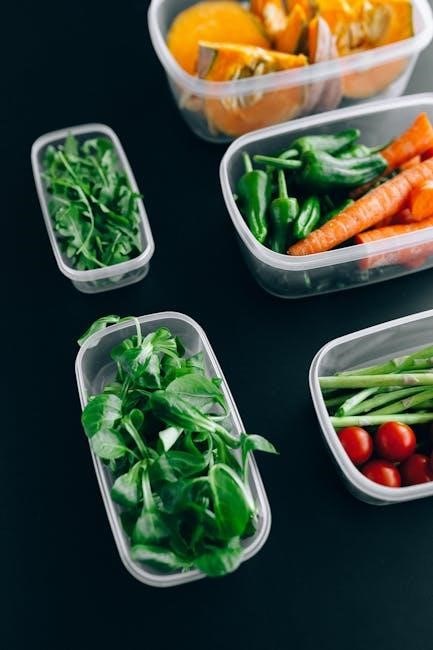
Meal prepping is essential for maintaining a consistent hormonal acne diet plan. Start by planning your meals weekly‚ focusing on whole‚ unprocessed foods. Use glass containers to store prepped meals‚ as they are healthier and prevent chemical leaching. Chop vegetables and fruits in advance to save time and ensure healthy snacks are readily available. Incorporate anti-inflammatory ingredients like leafy greens‚ berries‚ and omega-3 rich foods into your prepped meals. Stay hydrated by prepping flavored water or herbal teas. Cook proteins and whole grains in bulk to streamline lunch and dinner preparations. Portion control is key to avoiding overeating and maintaining macronutrient balance. Keep meals simple‚ nutritious‚ and delicious to stay committed to your diet plan.
Supplements for Hormonal Acne
Omega-3 fatty acids and probiotics are key supplements for hormonal acne‚ reducing inflammation and balancing gut health‚ which supports clear skin and hormonal stability naturally.
Omega-3 Fatty Acids
Omega-3 fatty acids are powerful anti-inflammatory agents that can significantly benefit hormonal acne. Found in fatty fish like salmon and sardines‚ these fats help reduce inflammation and promote healing in acne-prone skin. Vegetarian sources include flaxseeds‚ chia seeds‚ and walnuts. By incorporating omega-3s into your diet‚ you can address the root causes of hormonal imbalances that lead to breakouts. Additionally‚ omega-3s support overall skin health‚ improving elasticity and reducing redness. For those who struggle to get enough from food‚ high-quality fish oil supplements can be an effective alternative. Consistent intake of omega-3s can lead to noticeable improvements in skin clarity and reduced acne severity over time.
Probiotics
Probiotics are beneficial bacteria that support gut health‚ which is closely linked to skin health. A healthy gut microbiome helps regulate digestion‚ reduce inflammation‚ and balance hormones‚ all of which are crucial for managing hormonal acne. Studies suggest that probiotics may reduce skin inflammation and acne symptoms by improving the body’s ability to process toxins and maintain hormonal equilibrium. Fermented foods like yogurt‚ kefir‚ sauerkraut‚ and kimchi are excellent natural sources of probiotics. Incorporating these into your diet can promote a balanced gut and clearer skin. Additionally‚ probiotic supplements can be a convenient option for those seeking to enhance their skin health and reduce acne breakouts effectively.

Lifestyle Factors Beyond Diet
Lifestyle factors such as sleep and stress management significantly impact hormonal acne. Poor sleep and high stress can disrupt hormones‚ worsening breakouts. Prioritizing these areas supports skin health.
Sleep and Skin Health
Sleep plays a crucial role in hormonal balance and skin health. During sleep‚ the body regulates hormones‚ including those linked to acne. Poor sleep quality or insufficient sleep can disrupt cortisol levels‚ leading to increased inflammation and breakouts. Aim for 7-9 hours of quality sleep nightly to support skin regeneration and hormonal stability. Chronic sleep deprivation can exacerbate hormonal imbalances‚ making acne worse. Prioritizing a consistent sleep schedule and creating a relaxing bedtime routine can improve sleep quality and‚ in turn‚ support clearer skin. Addressing sleep issues is an essential part of managing hormonal acne holistically.
Stress Management
Stress significantly impacts hormonal balance‚ which can worsen hormonal acne. High stress levels increase cortisol production‚ leading to hormonal fluctuations and increased oil production. Chronic stress can also impair the immune system‚ making the skin more prone to inflammation and breakouts. Effective stress management techniques‚ such as meditation‚ yoga‚ and deep breathing exercises‚ can help regulate cortisol levels and reduce acne severity. Additionally‚ maintaining a consistent routine‚ practicing time management‚ and engaging in relaxing activities can mitigate stress. Addressing stress is a critical component of a holistic approach to managing hormonal acne‚ as it directly influences both hormonal and skin health.

Monitoring Progress
Tracking skin changes and adjusting your diet plan regularly is essential to manage hormonal acne effectively. Consistency and patience are key to achieving long-term results.
Tracking Skin Changes
Monitoring your skin regularly helps identify patterns and triggers of hormonal acne. Keep a journal to document breakouts‚ timing‚ and potential triggers like menstrual cycles or stress. Noting improvements or worsening symptoms allows you to refine your diet plan. Pay attention to the location and severity of breakouts‚ as this can indicate hormonal imbalances. Consistent tracking provides valuable insights‚ enabling you to make informed adjustments to your diet and lifestyle. Over time‚ this helps pinpoint which foods or habits positively or negatively impact your skin‚ ensuring a more personalized and effective approach to managing hormonal acne.
Adjusting the Diet Plan
As you monitor your skin‚ adjustments to your diet plan may be necessary to optimize results. If breakouts persist‚ consider identifying and eliminating specific triggers‚ such as dairy or high-sugar foods. Gradually introduce new foods while observing their impact on your skin. For example‚ incorporating more high-fiber or low-glycemic options may help regulate hormonal balance. Stay consistent with healthy eating habits and be patient‚ as skin improvements can take time. Regularly reviewing your progress and making tailored adjustments ensures the diet plan remains effective. Consulting a healthcare professional or dietitian can also provide personalized guidance for long-term success in managing hormonal acne.

Maintaining Long-Term Results
Consistency is key to sustaining clear skin. Focus on high-fiber‚ low-glycemic‚ and probiotic-rich foods while avoiding triggers like dairy and processed sugars. Regular health check-ups ensure lasting balance.
Sustaining Healthy Eating Habits
Consistency is crucial for long-term results in managing hormonal acne. Incorporate high-fiber‚ low-glycemic‚ and probiotic-rich foods into your daily meals to support gut health and hormonal balance. Avoid dairy‚ processed sugars‚ and refined carbohydrates that can trigger breakouts. Meal prepping can help maintain discipline‚ ensuring healthy choices even during busy days. Gradually introduce new foods to avoid overwhelming your system. Track your progress and adjust as needed. Staying hydrated and limiting alcohol and caffeine further supports skin health. By committing to these habits‚ you can achieve and maintain clear‚ radiant skin over time. Remember‚ patience and persistence are key to sustaining long-term results.
Regular Health Check-Ups
Regular health check-ups are essential for monitoring progress and ensuring overall well-being‚ especially when managing hormonal acne. Blood tests can reveal hormonal imbalances‚ insulin levels‚ and other markers that may contribute to breakouts. A healthcare provider can offer personalized recommendations based on these results‚ tailoring your diet plan for better efficacy. Routine check-ups also help identify underlying conditions‚ such as PCOS‚ that may be exacerbating acne. By addressing these factors early‚ you can achieve clearer skin and improve long-term health outcomes. Consistent medical guidance ensures your dietary and lifestyle changes remain aligned with your health goals‚ fostering sustainable results and overall wellness.
Expert Tips for Clear Skin
Stay hydrated‚ prioritize nutrient-rich diets‚ and incorporate whole foods‚ fiber‚ and healthy fats. Experts recommend leafy greens‚ omega-3s‚ and probiotics to support skin health and reduce inflammation.
Hydration
Hydration is essential for maintaining clear skin and managing hormonal acne. Drinking plenty of water helps flush out toxins‚ regulate blood sugar‚ and keep skin hydrated. Dehydration can lead to increased oil production‚ clogging pores and worsening breakouts. Aim for at least 8-10 glasses of water daily‚ and incorporate hydrating foods like cucumbers‚ watermelon‚ and celery. Herbal teas and electrolyte-rich beverages can also support hydration. Avoid sugary drinks that can spike insulin levels and inflammation. Proper hydration supports skin elasticity‚ reduces inflammation‚ and promotes a healthy complexion‚ making it a cornerstone of any hormonal acne diet plan.
Nutrient-Rich Diets
A nutrient-rich diet is vital for managing hormonal acne‚ as it provides essential vitamins‚ minerals‚ and antioxidants that support skin health. Foods high in antioxidants‚ such as berries‚ leafy greens‚ and nuts‚ help reduce inflammation and combat oxidative stress. Vitamin A-rich foods like carrots and sweet potatoes promote cell turnover‚ while vitamin C in citrus fruits and bell peppers boosts collagen production. Minerals like zinc‚ found in pumpkin seeds and shellfish‚ support hormonal balance and reduce acne severity. Incorporating a variety of colorful‚ whole foods ensures a broad spectrum of nutrients‚ which are critical for regulating hormones and maintaining clear‚ healthy skin. A balanced diet is a cornerstone of any effective hormonal acne management plan.
Managing hormonal acne requires a strategic diet approach‚ focusing on nutrient-rich‚ low-glycemic foods while avoiding triggers like sugar and dairy. Download the PDF for a comprehensive guide.
Final Thoughts on Managing Hormonal Acne
Managing hormonal acne requires patience‚ consistency‚ and a holistic approach. By focusing on a balanced diet rich in whole‚ nutrient-dense foods and avoiding triggers like sugar and dairy‚ individuals can significantly reduce breakouts. Incorporating high-fiber‚ low-glycemic‚ and probiotic-rich foods supports gut health and hormonal balance‚ which are crucial for clear skin. Supplements like omega-3 fatty acids and probiotics can further enhance these efforts. While diet plays a central role‚ it’s important to combine it with proper skincare‚ stress management‚ and adequate sleep for optimal results. Download the comprehensive hormonal acne diet plan PDF for a detailed guide to creating a personalized strategy tailored to your needs. Remember‚ clear skin is a long-term commitment‚ but with the right tools‚ it’s achievable.
Encouragement for Long-Term Commitment
Embracing a hormonal acne diet plan is a journey that requires dedication and persistence. While results may not appear overnight‚ consistent effort will lead to noticeable improvements in skin health and hormonal balance. Celebrate small victories‚ like fewer breakouts or clearer skin‚ to stay motivated. Remember‚ clear skin is a reflection of overall wellness‚ and the effort you invest in your diet and lifestyle will pay off in the long run. Download the comprehensive guide to stay on track and remind yourself that every healthy choice brings you closer to your goal of radiant‚ acne-free skin. Stay committed and patient—your skin will thank you!
Downloadable Hormonal Acne Diet Plan PDF
Access a comprehensive guide to managing hormonal acne through diet. This PDF offers expert tips‚ food lists‚ and strategies for achieving clear‚ healthy skin effortlessly.
Benefits of the Comprehensive Guide
The comprehensive guide provides a detailed roadmap for managing hormonal acne through dietary changes. It includes lists of foods to eat and avoid‚ meal planning tips‚ and strategies to balance hormones. The guide emphasizes the importance of high-fiber‚ low-glycemic‚ and probiotic-rich foods in reducing inflammation and promoting clear skin. Additionally‚ it offers insights into supplements like omega-3 fatty acids and probiotics that support skin health. By following the guide‚ individuals can create a personalized diet plan tailored to their needs‚ helping them achieve long-term results and maintain healthy‚ acne-free skin. This resource is invaluable for those seeking a holistic approach to managing hormonal acne effectively.
How to Access the PDF
Accessing the hormonal acne diet plan PDF is straightforward. Simply visit the provided link and download the guide for free. This comprehensive resource offers expert tips‚ meal plans‚ and strategies to manage hormonal acne through dietary changes. The PDF includes detailed lists of foods to eat and avoid‚ along with recipes and supplements that support skin health. By downloading the guide‚ you’ll gain a clear understanding of how to balance your hormones and reduce breakouts. The PDF is designed to be user-friendly‚ ensuring you can easily implement the recommended changes. Start your journey to clearer skin today by accessing this invaluable resource.