Aprilaire Manual Humidistat: Comprehensive Guide
Navigating Aprilaire manual humidistats requires understanding wiring, power checks, and potential obstructions. Inspect connections, verify power, and ensure proper ductwork airflow for optimal performance.
Understanding Aprilaire Humidistats
Aprilaire humidistats are crucial components in whole-house humidifier systems, diligently monitoring and regulating indoor humidity levels. These devices, often mechanically operated in older models, act as the “brain” of the humidifier, signaling when the unit should activate to add moisture to your home’s air. Understanding their function is key to maintaining comfortable and healthy indoor environments, especially during dry winter months.
Unlike smart or digital humidistats, manual Aprilaire models rely on a bimetallic strip that bends in response to humidity changes. This bending action physically opens or closes an electrical circuit, controlling the humidifier’s solenoid valve. Proper operation hinges on a consistent power supply to the humidistat and a correctly wired connection to both the furnace and the humidifier itself.
Furthermore, the furnace door switch integration is a vital safety feature, preventing operation if the furnace access door is open, safeguarding against potential electrical hazards. Recognizing these core principles is fundamental for effective troubleshooting and maintenance.
Types of Aprilaire Humidistats
Aprilaire offers a range of humidistat models, though focusing on manual versions reveals key distinctions. The classic Aprilaire 56 is a frequently encountered mechanical humidistat, known for its simple dial adjustment and robust construction. It relies entirely on a bimetallic strip for humidity sensing, lacking digital displays or advanced features.
Older systems might utilize even earlier models, sharing similar operational principles but potentially differing in physical design and wiring configurations. While less common now, these older units still function effectively when properly maintained.

It’s important to note that Aprilaire also produces digital and programmable humidistats, offering greater precision and control. However, this discussion centers on the manual types, characterized by their straightforward operation and reliance on mechanical sensing. Identifying the specific model number is crucial when seeking replacement parts or detailed troubleshooting guidance.
Manual Humidistat Operation: Basic Principles
Manual Aprilaire humidistats operate on a simple principle: a bimetallic strip bends in response to humidity levels. This strip is connected to a switch that controls the water valve supplying the humidifier. As humidity rises, the strip bends, eventually breaking the circuit and shutting off the water flow. Conversely, as humidity drops, the strip straightens, completing the circuit and activating the water valve.
The dial on the humidistat adjusts the tension on this bimetallic strip, effectively setting the desired humidity level. A furnace door switch is often integrated for safety; the humidifier won’t operate if the furnace door is open. Power is supplied via wiring from the furnace transformer, typically using red and white wires.
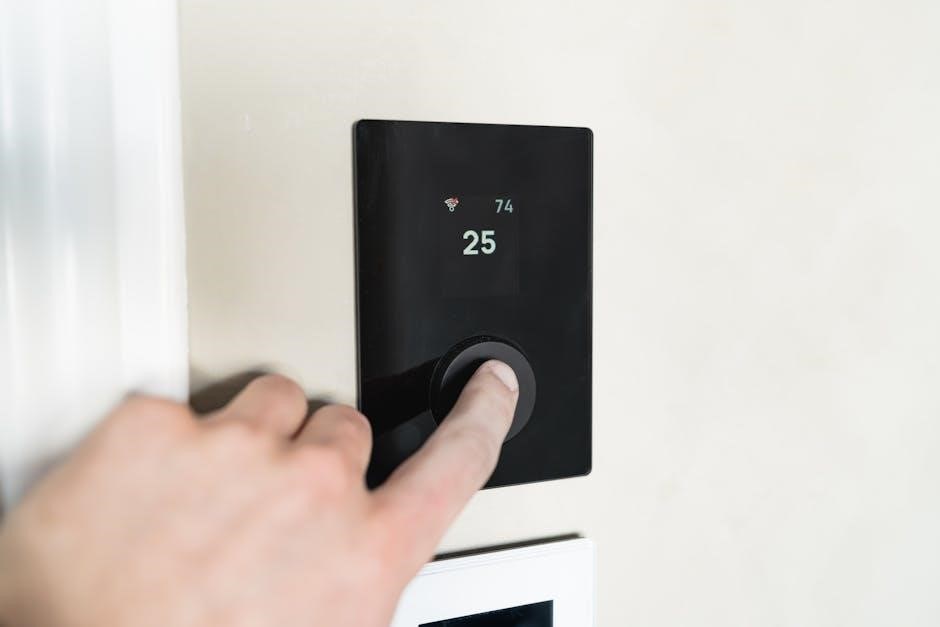
Understanding this mechanical linkage is key to troubleshooting, as issues often stem from a stuck switch or a malfunctioning bimetallic strip.
Setting the Humidity Level
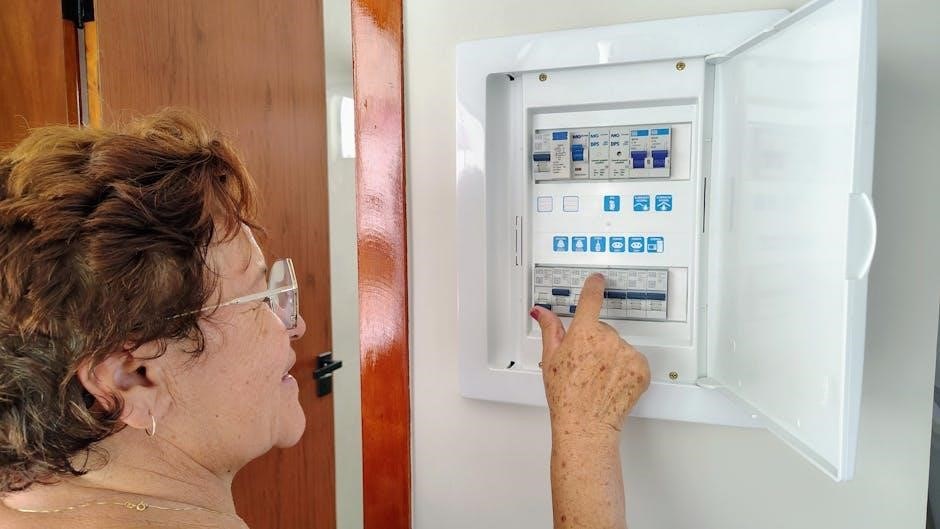
Adjusting the humidity level on an Aprilaire manual humidistat is straightforward, but requires understanding the dial’s markings. Typically, the dial features a numbered scale, often ranging from 1 to 10, representing increasing humidity percentages. Start with a lower setting, around 3 or 4, and observe the humidity levels in your home.
Gradually increase the setting if the humidity remains too low. Consider seasonal adjustments; lower settings are ideal during warmer months to prevent condensation, while higher settings are suitable for drier winter periods. Monitor for signs of excessive humidity, such as condensation on windows, and adjust accordingly.
Remember, achieving the optimal humidity level is a balancing act, and personal comfort plays a significant role in the final setting.
Understanding the Humidity Scale
The humidity scale on an Aprilaire manual humidistat isn’t a direct percentage readout, but rather a relative index. Lower numbers, typically 1-3, correspond to lower humidity levels, generally between 20-30% relative humidity. These settings are suitable for colder climates or when minimizing moisture is crucial.
Mid-range settings, 4-7, represent moderate humidity, usually falling between 30-50%. This range is often comfortable for most households during transitional seasons. Higher numbers, 8-10, indicate higher humidity, potentially reaching 50-60% or more.
Be cautious with these higher settings, as excessive humidity can lead to condensation and mold growth. The ideal range is generally considered to be between 30-50%, balancing comfort and preventing moisture-related issues.
Seasonal Adjustments for Optimal Performance
Aprilaire humidistats require seasonal adjustments to maintain ideal indoor humidity levels. As winter approaches, lower temperatures necessitate increased humidity to counteract the drying effects of heating systems. Gradually increase the humidistat setting to a comfortable level, typically between 4-6, monitoring for condensation.
During spring and fall, moderate settings (3-5) are usually sufficient. As summer arrives, reduce the setting to 1-3, or even turn off the humidifier, to prevent excessive humidity and potential mold growth.
Regularly assess your home’s humidity levels and adjust the humidistat accordingly. Consider factors like outdoor temperature, window usage, and ventilation to fine-tune performance throughout the year.
Troubleshooting Common Issues
Addressing Aprilaire humidistat issues often begins with simple checks. If the unit isn’t functioning, first inspect control boards and wiring for loose connections or visible damage, carefully reseating them if comfortable. Look for error codes displayed on your thermostat or furnace – consult the unit’s manual for interpretation.
Common problems include a dry or clogged water panel, mineral buildup restricting water flow, and a blocked drain line. Ensure the water supply is active and the panel is clean.
Suction problems caused by duct tape obstructions are also frequent; remove any tape near duct connections. If issues persist, a technician may be needed for more complex diagnostics.
No Power to the Humidistat

When an Aprilaire humidistat receives no power, systematic troubleshooting is crucial. Begin by verifying the transformer supplying power to the system is functioning correctly. Trace the red wire from the transformer to the humidistat, ensuring a secure connection at both ends.
A common issue involves the furnace door switch; the white wire from the humidistat connects to a solenoid, and another white wire leads back to this switch. The furnace won’t operate if the door switch is disengaged.
Carefully inspect all wiring for breaks or corrosion. If problems persist, a multimeter can confirm voltage presence at the humidistat terminals.
Humidistat Not Responding to Adjustments
If your Aprilaire humidistat isn’t responding to adjustments, several factors could be at play. First, double-check the humidistat’s settings to ensure it’s not already at the desired humidity level. A faulty humidistat sensor might be failing to detect actual humidity, preventing response to manual changes.

To test the sensor, carefully remove the humidistat from the ductwork and use a hair dryer to gently warm the back of the unit. If this prompts a response, the sensor is likely the issue.
Inspect control boards and wiring for loose connections or visible damage, reseating them carefully if comfortable, or contacting a technician.
Incorrect Humidity Readings
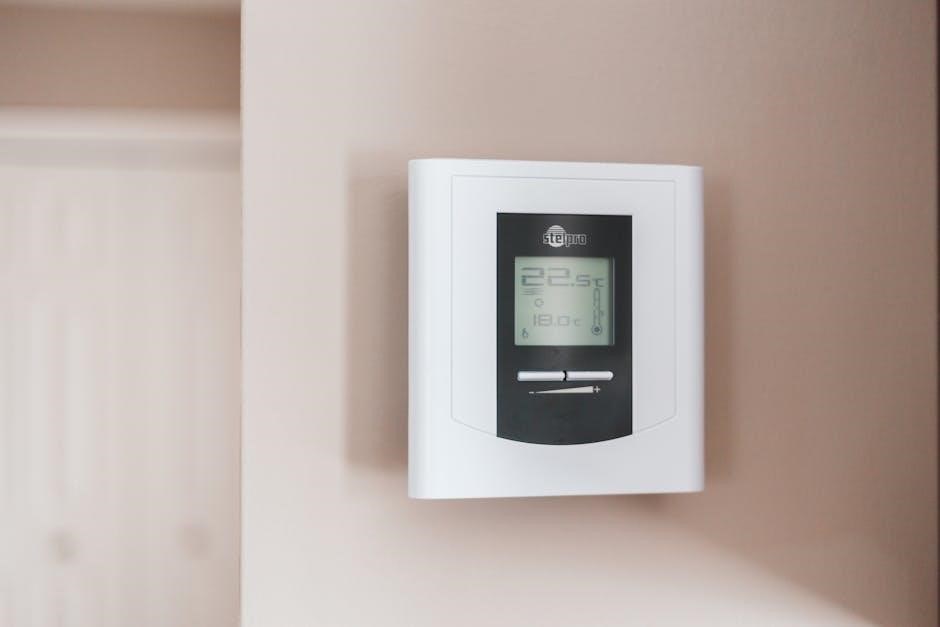
Experiencing inaccurate humidity readings from your Aprilaire manual humidistat can stem from several sources. A common culprit is mineral buildup on the water panel, hindering proper evaporation and skewing readings. Regularly cleaning the water panel is crucial for accuracy.
Furthermore, ensure the humidistat sensor isn’t directly exposed to drafts or extreme temperatures, as this can influence its measurements. Consider its placement within the ductwork.
If readings remain consistently off, the sensor itself may be faulty and require replacement. Inspect wiring connections to the humidistat; loose or corroded wires can also cause inaccurate data transmission. Consult the unit’s manual for specific troubleshooting steps and calibration procedures.
Wiring and Electrical Connections
Proper wiring is fundamental for a functioning Aprilaire manual humidistat. Typically, a red wire connects from the transformer to the humidistat, providing power. A white wire then runs from the humidistat to the solenoid valve, activating water flow. Another white wire often connects the solenoid valve back to the furnace’s door switch – a safety feature preventing operation without the door secured.
Carefully inspect all connections for looseness or visible damage. Reseat connections if comfortable, but if unsure, consult a qualified technician. Ensure wires are securely fastened and free from corrosion.
Always disconnect power before working with electrical components. Incorrect wiring can lead to malfunction or even safety hazards. Refer to your unit’s wiring diagram for precise configuration details.
Identifying Wiring Configurations (Red, White Wires)
Understanding the color-coding of Aprilaire humidistat wiring is crucial for troubleshooting. The red wire consistently serves as the power supply line, originating from the transformer. This provides the necessary voltage to operate the humidistat and solenoid valve. White wires typically handle the control signals and complete the circuit.

One white wire connects the humidistat to the solenoid valve, signaling it to open and allow water flow when humidity levels drop. Another white wire often links the solenoid valve to the furnace’s door switch, ensuring the furnace is safely operational before humidification begins.
Variations exist, so always consult your specific model’s wiring diagram. Incorrectly identifying or connecting these wires can prevent operation or cause damage.
Checking for Loose Connections
A primary step in Aprilaire humidistat troubleshooting is meticulously inspecting all wiring connections. Loose connections interrupt the electrical pathway, preventing the system from functioning correctly. Begin by carefully examining the connections at the humidistat itself, ensuring each wire is securely fastened to its terminal.
Next, trace the wiring to the transformer, solenoid valve, and furnace door switch, verifying tightness at each point. Gently tug on each wire to confirm it’s firmly seated. Look for any signs of corrosion or damage to the wires or terminals, which can also impede conductivity.

Reseat any loose connections, and if damage is present, consider replacing the affected wiring. A secure connection is vital for reliable operation.
Importance of Furnace Door Switch Integration
The furnace door switch plays a critical safety role in Aprilaire humidistat systems. It’s integrated into the wiring circuit to prevent the humidifier from operating when the furnace access door is open, safeguarding against potential electrical hazards and mechanical damage.
Typically, a white wire from the humidistat’s solenoid valve connects to this switch before returning to the furnace. If the switch is faulty or bypassed, the humidifier might attempt to run without sufficient airflow, leading to overheating or component failure.
Always ensure the furnace door switch is functioning correctly. A malfunctioning switch can also prevent the humidifier from operating altogether, mimicking other issues. Verify its proper operation as part of your troubleshooting process.
Water Panel and Water Supply Issues
Consistent humidifier operation hinges on a properly functioning water panel and a reliable water supply. Common problems include a dry or clogged water panel, preventing adequate water absorption and distribution into the airflow.
Mineral buildup from hard water is a frequent culprit, restricting water flow and reducing efficiency. Regular cleaning with a vinegar solution can mitigate this. Inspect the water supply line for kinks or obstructions, ensuring sufficient water pressure reaches the humidifier.
A blocked drain line can also cause issues, leading to water accumulation and potential damage. Ensure the drain line is clear and unobstructed for proper water discharge. Addressing these water-related concerns is crucial for optimal performance.
Dry or Clogged Water Panel
A dry or clogged water panel is a frequent cause of Aprilaire humidifier malfunction. If the panel isn’t adequately wetted, it can’t effectively add moisture to the air. Conversely, a clogged panel restricts water flow, diminishing humidification capacity.
Mineral deposits, particularly in areas with hard water, are primary contributors to clogging. Regular inspection and cleaning are vital; a vinegar soak often dissolves buildup. Ensure the water supply valve is fully open and the water panel is receiving sufficient water pressure.
Visually check the panel for physical obstructions or damage. Replacing a severely clogged or damaged panel may be necessary to restore optimal humidifier performance and consistent humidity levels.
Mineral Buildup and Cleaning
Mineral buildup within the Aprilaire humidifier is a common issue, especially with hard water sources. This accumulation restricts water flow, reducing humidification efficiency and potentially damaging components. Regular cleaning is crucial for maintaining optimal performance.
White vinegar is an effective and readily available cleaning agent. Periodically soak the water panel and other affected parts in a vinegar solution to dissolve mineral deposits. Follow the manufacturer’s instructions for dilution ratios and soak times.
Thoroughly rinse all components with clean water after soaking to remove any residual vinegar. Preventative measures, like installing a water softener, can significantly reduce mineral buildup and extend the humidifier’s lifespan.
Blocked Drain Line
A blocked drain line is a frequent cause of Aprilaire humidifier malfunctions, leading to water damage and reduced efficiency. Humidifiers produce condensate as a byproduct of operation, and a clogged drain prevents proper disposal of this water.
Regularly inspect the drain line for obstructions like mineral deposits, algae growth, or debris. You can often clear minor blockages using a wet/dry vacuum or by flushing the line with warm water. For stubborn clogs, a flexible drain snake may be necessary.
Ensure the drain line has a proper downward slope to facilitate drainage. Consider periodic preventative maintenance, such as pouring a cup of diluted bleach into the drain line to inhibit algae growth. Promptly address any signs of water leakage around the humidifier.
Ductwork Considerations
Proper ductwork integration is crucial for optimal Aprilaire humidifier performance. The unit must be correctly connected to the duct system to effectively distribute moisture throughout your home’s heating system.

Inspect duct connections for airtight seals and ensure there are no obstructions hindering airflow. A common issue is the improper application of duct tape, which can peel and create suction problems, particularly around the humidifier unit itself.
Remove any existing duct tape and replace it with appropriate foil tape or duct sealant. Verify that the ductwork isn’t crushed or kinked, restricting airflow. Adequate airflow is essential for the water panel to evaporate moisture efficiently, preventing stagnant water and potential mold growth.
Checking for Suction Problems at Duct Connections
Suction issues at duct connections significantly impact Aprilaire humidifier efficiency. Restricted airflow prevents proper moisture evaporation, leading to inadequate humidity levels and potential component damage.
Begin by visually inspecting the area where the Aprilaire unit connects to the ductwork. Look for any signs of collapsed or restricted ducts. A telltale sign of suction problems is the presence of peeling or improperly applied duct tape.
Carefully remove any duct tape found in this area, as it frequently causes obstructions. Ensure the connection is smooth and unobstructed. Test airflow by briefly running the furnace and feeling for consistent air movement at the duct connection point.
Removing Duct Tape Obstructions
Duct tape, while seemingly innocuous, is a common culprit behind Aprilaire humidifier malfunctions, specifically causing suction problems. Its adhesive properties attract dust and debris, creating significant airflow restrictions within the ductwork.
Carefully and methodically remove all duct tape from the area where the Aprilaire unit connects to the duct system. Ensure no residue remains, as even small fragments can impede airflow. Use a plastic scraper to avoid damaging the ductwork’s surface.
After removal, thoroughly inspect the duct interior for any remaining tape fragments or accumulated debris. A shop vacuum with a hose attachment can be helpful for this task. Restoring unobstructed airflow is crucial for optimal humidifier performance and longevity.
Advanced Troubleshooting Techniques
When standard checks fail, more nuanced techniques can diagnose Aprilaire humidifier issues. One method involves using a hair dryer to directly warm the humidistat’s sensor. This tests if the sensor is responsive to temperature changes, indicating potential internal failure.
Pay close attention to any error codes displayed on the furnace or thermostat. These codes provide valuable clues about the specific problem. Consult the unit’s manual for a comprehensive list and their corresponding solutions.
Systematically analyze wiring configurations, referencing the manual for correct connections. A multimeter can verify voltage and continuity, identifying breaks or shorts. Remember safety first – disconnect power before electrical testing!
Using a Hair Dryer to Test the Humidistat
A practical diagnostic step involves utilizing a hair dryer to assess the humidistat’s functionality. Carefully remove the humidistat from its ductwork mounting. Direct warm air from the hair dryer onto the back of the humidistat unit, mimicking a humidity increase.
Observe if the humidistat responds by activating the solenoid valve, signaling a potential operational capacity. If no response is detected, even with applied heat, it strongly suggests a faulty sensor or internal component within the humidistat itself.
Exercise caution during this test, avoiding excessive heat or prolonged exposure. This method is a quick way to isolate whether the humidistat is physically capable of reacting to changes, guiding further troubleshooting steps.
Identifying and Interpreting Error Codes
Modern Aprilaire systems, particularly those integrated with programmable thermostats or furnace displays, often communicate issues through error codes. These codes serve as valuable diagnostic clues, pinpointing the source of the humidifier malfunction.
Carefully note any displayed error codes and immediately consult the unit’s manual for their specific meanings. The manual provides a comprehensive list, detailing the problem and recommended solutions. Common codes relate to water supply issues, solenoid valve failures, or sensor malfunctions.
If the manual is unavailable, contacting Aprilaire support with the error code can provide expert guidance. Accurate interpretation of these codes significantly streamlines the troubleshooting process, saving time and potential repair costs.
Consulting the Unit’s Manual
The Aprilaire humidifier’s manual is your primary resource for troubleshooting and understanding its operation. It contains detailed diagrams of wiring configurations, explanations of error codes, and step-by-step instructions for maintenance procedures.
Before attempting any repairs, locate and thoroughly review the manual specific to your model number. This ensures you’re following the correct procedures and avoiding potential damage. Pay close attention to safety warnings and electrical precautions.
The manual outlines recommended cleaning schedules, water panel replacement guidelines, and troubleshooting steps for common issues. It also provides contact information for Aprilaire support should you require further assistance. Keeping the manual readily accessible is crucial for long-term humidifier health.