The Charge of the Light Brigade Poem: A Comprehensive Overview
Finding a “Charge of the Light Brigade Poem PDF” is easily achievable through reliable online sources‚ including poetry archives and databases.
Consider quality and format when downloading‚ ensuring accessibility for study and enjoyment of Tennyson’s powerful verses.
Historical Context of the Battle
The Charge of the Light Brigade unfolded during the Crimean War (1853-1856)‚ a conflict primarily involving Russia against an alliance of Britain‚ France‚ the Ottoman Empire‚ and Sardinia. This war stemmed from Russia’s desire to expand its influence in the declining Ottoman Empire‚ particularly seeking access to warm-water ports. The Battle of Balaclava‚ where the charge occurred on October 25‚ 1854‚ was a relatively small engagement within the larger Crimean campaign‚ focused on controlling key strategic locations.
However‚ it became infamous due to a disastrous miscommunication. Lord Raglan‚ the British commander‚ issued an ambiguous order intending for the Light Brigade to prevent the Russians from removing captured guns. Unfortunately‚ the order was misinterpreted‚ leading the brigade to charge directly into a heavily defended Russian artillery position. This resulted in immense casualties‚ with over half the brigade’s soldiers killed or wounded. The event quickly captured public attention‚ becoming a symbol of both courage and the tragic consequences of military blunders.

The Crimean War and its Significance
The Crimean War (1853-1856) was a pivotal conflict reshaping European power dynamics. Initially‚ it centered on protecting the Ottoman Empire from Russian expansionism‚ fueled by religious disputes over access to holy sites. However‚ it quickly escalated into a broader struggle for influence in the region‚ drawing in major European powers like Britain and France‚ concerned about Russia’s growing strength. The war exposed significant deficiencies in British military organization and logistics‚ prompting calls for reform.
Beyond military aspects‚ the Crimean War marked a turning point in warfare with the introduction of modern technologies like the electric telegraph and improved artillery. Notably‚ it also saw pioneering efforts in war correspondence‚ with journalists like William Howard Russell providing firsthand accounts of the battles‚ including the Charge of the Light Brigade‚ to the British public. This increased public scrutiny of the war effort and its leadership. The conflict’s outcome‚ ultimately a defeat for Russia‚ limited its expansionist ambitions and contributed to a period of relative peace in Europe.
The Miscommunication Leading to the Charge
The Charge of the Light Brigade stemmed from a disastrous miscommunication during the Battle of Balaclava in 1854. Lord Raglan‚ the British commander‚ intended to order the Light Brigade to prevent the Russians from removing captured guns from a redoubt. However‚ his written order was ambiguous‚ and Captain Nolan‚ the messenger‚ delivered it imprecisely to Lord Lucan‚ commander of the Cavalry Division.
Nolan’s instructions‚ coupled with Lucan’s perceived lack of clarity regarding the target‚ led to the interpretation that the Light Brigade should advance directly into a heavily defended Russian artillery battery. Critically‚ Lucan questioned the order‚ believing it to be reckless‚ but ultimately complied‚ sending the Light Brigade into the “valley of death.” The ambiguity arose from a poorly worded instruction and Nolan’s own potentially unclear delivery‚ exacerbated by existing tensions between Lucan and Raglan. This fatal misunderstanding resulted in a heroic‚ yet tragically futile‚ assault.
Lord Raglan’s Order and its Ambiguity
Lord Raglan’s order‚ the catalyst for the Charge of the Light Brigade‚ was notoriously ambiguous. He intended for the Light Brigade to recapture guns seized by the Russians‚ but his written instruction lacked precise direction regarding the specific target. The order stated‚ “Lord Raglan wishes you to advance quickly to the front‚ and try to prevent the enemy from carrying away the guns.”
Crucially‚ the phrase “to the front” was open to interpretation. It wasn’t clear which front Raglan referred to – the one facing the Causeway Redoubt‚ or the one further along where the Russian guns were positioned. This vagueness‚ compounded by Captain Nolan’s delivery‚ led Lord Lucan to believe the advance was directed towards a heavily fortified Russian battery. The lack of specific coordinates or landmarks in the order contributed significantly to the confusion. Consequently‚ the Light Brigade charged directly into a deadly crossfire‚ a tragic outcome stemming from imprecise communication.
Alfred‚ Lord Tennyson and the Poem
Tennyson‚ as Poet Laureate‚ responded swiftly to the news of the battle‚ crafting a poem that captured the nation’s admiration for the soldiers’ bravery and sacrifice.
Tennyson’s Role as Poet Laureate
Alfred‚ Lord Tennyson‚ held the esteemed position of Poet Laureate during a period of significant national events‚ and the Crimean War profoundly impacted his work. Appointed in 1850‚ succeeding William Wordsworth‚ Tennyson felt a strong sense of duty to reflect the spirit of the age through his poetry; When news of the Charge of the Light Brigade reached England in late 1854‚ it sparked both outrage and admiration.
Tennyson‚ deeply moved by the soldiers’ courage despite the disastrous miscommunication‚ swiftly began composing his poem. His role as Laureate demanded a response that would both honor the bravery displayed and acknowledge the tragedy of the event. The poem wasn’t intended as a political statement‚ but rather as a tribute to the soldiers’ unwavering dedication to duty.
The speed with which Tennyson wrote and published the poem – appearing in The Times just weeks after the battle – demonstrates his commitment to his role and his desire to provide a national voice for the collective emotions surrounding the Charge. Accessing a “Charge of the Light Brigade Poem PDF” allows modern readers to experience the immediacy and impact of Tennyson’s verse.
The Immediate Response to the Battle
Initial reports of the Charge of the Light Brigade‚ arriving in Britain in October 1854‚ ignited a firestorm of public reaction. While accounts highlighted the extraordinary bravery of the soldiers‚ they simultaneously revealed the shocking incompetence that led to such a futile and devastating attack. Newspapers were filled with detailed‚ often conflicting‚ narratives of the event‚ fueling public outrage and demands for accountability.
Correspondents like William Howard Russell‚ reporting directly from the Crimea‚ provided graphic descriptions of the carnage‚ emphasizing the needless loss of life. This fueled a national debate about the leadership and strategic blunders that characterized the war effort. The public craved a way to process the tragedy and honor the soldiers’ sacrifice.
Tennyson’s poem quickly emerged as a powerful outlet for these emotions. A “Charge of the Light Brigade Poem PDF” provides access to the verses that captured the nation’s complex feelings – admiration for courage mingled with grief and anger at the circumstances. The poem offered a narrative of heroic defiance in the face of overwhelming odds.
Publication and Initial Reception of the Poem
Tennyson’s “The Charge of the Light Brigade” was first published in The Times on December 6‚ 1854‚ just weeks after news of the battle reached England. Its immediate impact was phenomenal. The poem resonated deeply with a public already captivated by‚ and grieving over‚ the events in Crimea. A readily available “Charge of the Light Brigade Poem PDF” today allows modern readers to experience that initial emotional impact.
The poem was widely reprinted in other newspapers and periodicals‚ quickly becoming a national sensation. It was praised for its stirring rhythm‚ vivid imagery‚ and powerful depiction of courage and duty. While some critics questioned its glorification of a disastrous military action‚ the overwhelming response was overwhelmingly positive.
The poem offered a comforting narrative of heroism amidst tragedy‚ allowing the public to celebrate the bravery of the soldiers even while lamenting the strategic failures that led to their suffering. It solidified Tennyson’s position as Poet Laureate and became an instant classic‚ ensuring its enduring legacy through accessible formats like the PDF.
Analyzing the Poem’s Structure and Form
Examining the poem reveals a dynamic meter and rhyme scheme‚ enhancing its dramatic effect; a “Charge of the Light Brigade Poem PDF” aids close reading and structural analysis.
The Poem’s Meter and Rhyme Scheme
Tennyson’s masterful use of rhythm and rhyme significantly contributes to the poem’s compelling energy and memorable quality. Primarily‚ “The Charge of the Light Brigade” employs dactylic meter – a pattern of one stressed syllable followed by two unstressed ones – creating a galloping‚ forward-moving effect that mirrors the cavalry charge itself. This meter isn’t rigidly maintained throughout‚ adding to the poem’s natural‚ spoken quality.
The rhyme scheme is equally crucial‚ largely following an AABB CCDD pattern in many stanzas‚ providing a sense of momentum and driving the narrative forward. However‚ Tennyson skillfully varies this scheme‚ particularly in the final stanzas‚ to emphasize key themes and emotional impact. Accessing a “Charge of the Light Brigade Poem PDF” allows for detailed annotation and visual tracking of these rhythmic and rhyming patterns‚ enhancing understanding of their artistic function.
Furthermore‚ the consistent structure‚ despite subtle variations‚ reinforces the poem’s themes of duty‚ courage‚ and the relentless march towards fate. The predictable rhythm and rhyme create a hypnotic effect‚ drawing the reader into the heart of the battle and amplifying the poem’s emotional resonance.
Stanza-by-Stanza Breakdown
The first stanza establishes the context – a valley of death and a fateful order. Subsequent stanzas vividly depict the charge itself‚ utilizing powerful imagery of cannons‚ sabers‚ and the relentless advance despite overwhelming odds. A “Charge of the Light Brigade Poem PDF” facilitates close reading‚ revealing how each stanza builds upon the previous‚ intensifying the sense of chaos and bravery.
Stanzas three and four focus on the direct confrontation‚ detailing the soldiers’ courage as they “broke through” enemy lines. The poem then shifts to the aftermath‚ acknowledging the heavy losses – “All that was left of them‚ / Left of six hundred.” The penultimate stanza emphasizes the soldiers’ unwavering dedication to duty‚ even in the face of certain death.
Finally‚ the concluding stanza serves as a powerful tribute‚ repeatedly honoring the Light Brigade’s “noble” charge. Analyzing each stanza within a PDF version allows for a deeper appreciation of Tennyson’s narrative structure and the poem’s emotional arc‚ highlighting the tragic heroism of the soldiers.
Repetition and its Effect (“Noble Six Hundred”)
Tennyson’s masterful use of repetition‚ particularly the refrain “Noble six hundred‚” profoundly impacts the poem’s emotional resonance. Accessing a “Charge of the Light Brigade Poem PDF” allows focused study of these recurring phrases and their evolving significance throughout the verses. The initial mention establishes the number of soldiers‚ while subsequent repetitions transform into a rallying cry and a lament for their sacrifice.
The phrase isn’t merely descriptive; it elevates the soldiers to a heroic status‚ imbuing their charge with a sense of nobility and unwavering courage. This repetition reinforces the theme of duty and valor‚ even amidst the futility of the mission. A PDF format enables easy tracking of each instance‚ revealing how the context subtly alters the refrain’s meaning.
Ultimately‚ the repeated invocation of “Noble six hundred” serves as a lasting memorial‚ ensuring their bravery won’t be forgotten. It’s a testament to their dedication and a poignant reminder of the cost of war‚ powerfully conveyed through Tennyson’s poetic technique.

Key Themes and Symbolism
A “Charge of the Light Brigade Poem PDF” reveals themes of duty‚ courage‚ and war’s futility. The poem glorifies bravery‚ yet subtly questions the cost of blind obedience and valor.
Duty‚ Courage‚ and Sacrifice
Examining a “Charge of the Light Brigade Poem PDF” immediately highlights the unwavering sense of duty displayed by the soldiers. Tennyson emphasizes their obedience‚ even in the face of certain death‚ portraying a commitment to orders that transcends self-preservation. This dedication is inextricably linked to the poem’s exploration of courage – not a reckless bravado‚ but a stoic acceptance of fate and a willingness to confront overwhelming odds.
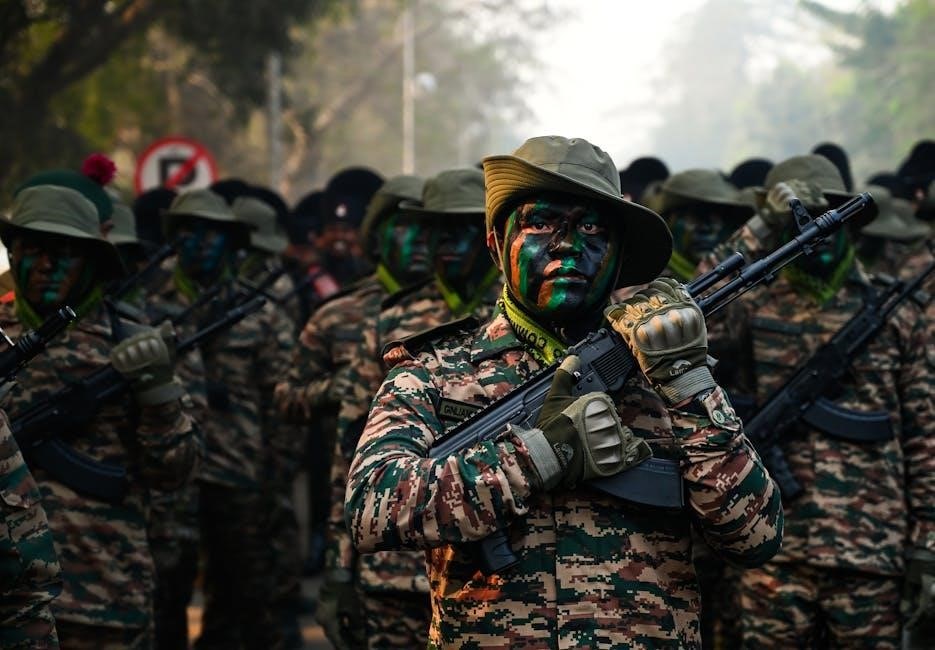
The poem doesn’t shy away from the brutal reality of sacrifice. Lines detailing the falling of “horse and hero” underscore the immense cost of this charge. However‚ Tennyson frames this sacrifice not as a senseless loss‚ but as a noble offering‚ elevating the soldiers to a heroic status. The repetition of “Noble six hundred” reinforces this idea‚ suggesting that their valorous act will forever be remembered and honored.
Through the PDF‚ one can analyze how Tennyson uses vivid imagery and powerful language to convey the soldiers’ unwavering spirit. Their charge‚ though strategically flawed‚ becomes a testament to their courage and a poignant illustration of the sacrifices made in the name of duty.
The Futility of War
Analyzing a “Charge of the Light Brigade Poem PDF” reveals a subtle‚ yet powerful‚ critique of war’s inherent futility. While Tennyson celebrates the soldiers’ bravery‚ the poem simultaneously exposes the senselessness of the charge itself‚ born from miscommunication and flawed command. The relentless barrage of “shot and shell” and the description of soldiers “shatter’d and sunder’d” paint a grim picture of destruction‚ questioning the glory often associated with battle.
The poem doesn’t explicitly condemn war‚ but the sheer waste of life – “All that was left of them‚ / Left of six hundred” – implicitly challenges its justification. The heroic valor displayed feels tragically misplaced‚ highlighting the disconnect between the soldiers’ courage and the strategic blunder that led to their suffering.
Examining the PDF allows readers to discern how Tennyson uses the poem’s structure and imagery to underscore this theme. The rapid pace and chaotic descriptions mirror the confusion and carnage of war‚ ultimately suggesting that even the most valiant efforts can be rendered meaningless by the absurdity of conflict.
The Glorification of Military Bravery
A “Charge of the Light Brigade Poem PDF” showcases Tennyson’s masterful glorification of military bravery‚ despite the disastrous outcome of the charge. The poem doesn’t shy away from depicting the horrors of battle – “horse and hero fell” – yet consistently emphasizes the soldiers’ unwavering courage and dedication to duty. Phrases like “noble six hundred” repeatedly reinforce a sense of admiration and respect for their selflessness.
Tennyson elevates the soldiers to heroic status‚ focusing on their willingness to follow orders‚ even in the face of certain death. The imagery of “sabres bare” and charging “through the jaws of Death” evokes a sense of fearless determination. This isn’t a condemnation of the command‚ but a celebration of the men who executed it with unwavering resolve.
Studying the PDF reveals how Tennyson employs repetition and powerful language to amplify this glorification. The poem’s refrain‚ “Honour the charge they made!” serves as a constant reminder of their valor‚ ensuring their bravery is eternally remembered and celebrated.
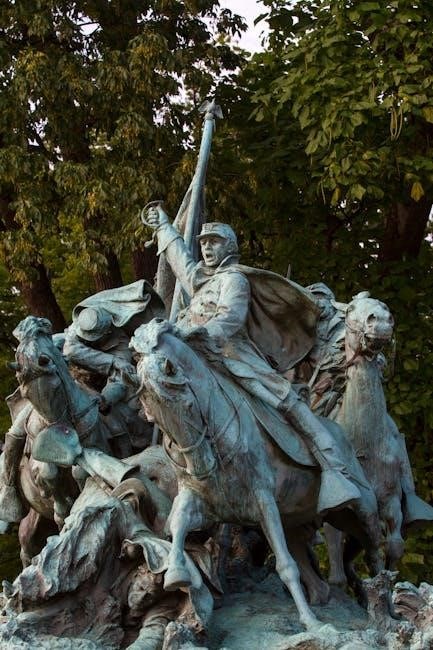
Finding and Accessing the “Charge of the Light Brigade Poem PDF”
Numerous online poetry archives and databases offer the “Charge of the Light Brigade Poem PDF” for easy access. Reliable sources ensure quality downloads for study.
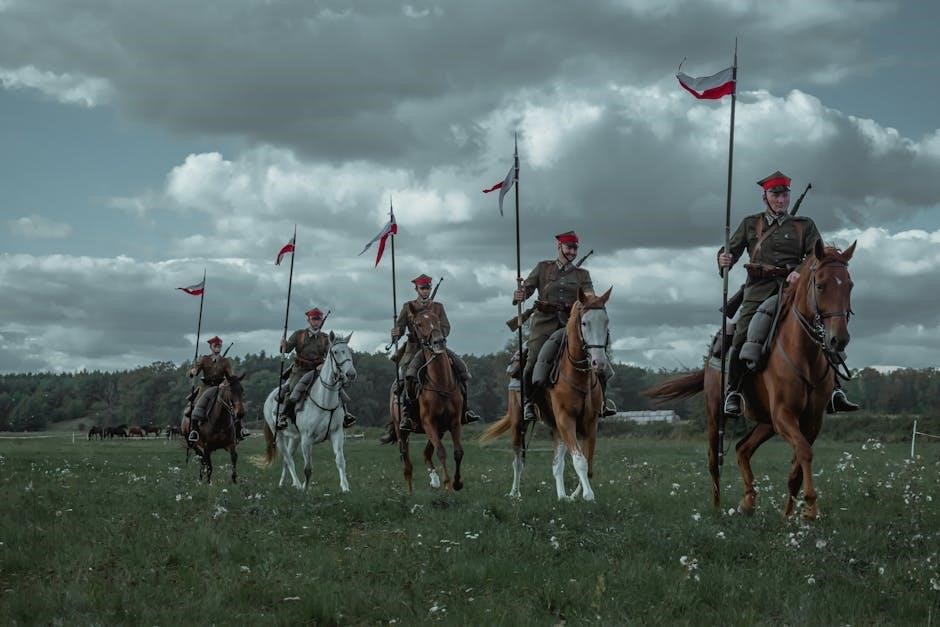
Reliable Sources for PDF Downloads
Securing a high-quality “Charge of the Light Brigade Poem PDF” requires utilizing trustworthy online platforms. The Academy of American Poets website (https://www.poetryfoundation.org/) frequently hosts poems in downloadable formats‚ ensuring accurate transcriptions and a clean presentation. Similarly‚ Owl Eyes (https://www.owleyes.org/text/charge-of-the-light-brigade) provides accessible text versions‚ often available for PDF export or download.
Project Gutenberg (https://www.gutenberg.org/) is another excellent resource‚ offering a vast library of classic literature‚ including Tennyson’s works‚ in various digital formats‚ including PDF. BBC’s Poetry Season archives (https://www.bbc.co.uk/poetryseason/poems/charge-of-the-light-brigade) may also contain downloadable resources or links to reputable sources.
When downloading‚ prioritize sites with established reputations for academic integrity and accurate content. Avoid unofficial or obscure websites‚ as they may contain errors or compromised file quality. Always scan downloaded files with antivirus software to ensure safety.
Online Poetry Archives and Databases
Numerous online poetry archives and databases offer access to the “Charge of the Light Brigade Poem‚” frequently with PDF download options. Poetry Foundation (https://www.poetryfoundation.org/) stands out as a premier resource‚ providing meticulously curated collections and reliable transcriptions of classic poems. Similarly‚ Poem Hunter (https://www.poemhunter.com/poem/the-charge-of-the-light-brigade/) hosts a vast library of poetry‚ including Tennyson’s work‚ often allowing users to copy and paste the text for personal use or PDF creation.
Internet Archive (https://archive.org/) is a digital library offering scanned copies of books and periodicals‚ potentially including collections containing the poem in PDF format. Additionally‚ many university libraries maintain digital collections of poetry accessible online‚ providing scholarly editions and reliable sources.
Exploring these databases allows for comparison of different versions and annotations‚ enhancing understanding of the poem’s context and meaning. Remember to verify the source’s credibility before relying on any downloaded PDF for academic purposes.
Considerations for PDF Quality and Format
When downloading a “Charge of the Light Brigade Poem PDF‚” prioritize quality and format for optimal readability and usability. Scanned PDFs may exhibit imperfections like skewed text or low resolution‚ impacting the reading experience. Opt for PDFs generated from digital text whenever possible‚ ensuring clarity and accurate transcription of Tennyson’s verses.
File size is another consideration; excessively large PDFs can be cumbersome to share or store. Check if the PDF is searchable‚ allowing you to quickly locate specific lines or stanzas within the poem. Furthermore‚ assess the formatting – a well-formatted PDF will preserve the poem’s stanza structure and line breaks‚ crucial for appreciating its rhythm and rhyme scheme.
Beware of PDFs containing extraneous annotations or watermarks that detract from the poem’s original text. Always verify the source’s reliability to avoid downloading corrupted or inaccurate versions. A clean‚ clear‚ and searchable PDF will greatly enhance your study and enjoyment of this iconic poem.